How can a city look when fossil fuels are no longer available? What role do renewable energies, battery storage, research and community living play? And how can future-focused topics like these be communicated in a way that children and young people not only understand them, but also continue to develop them creatively?
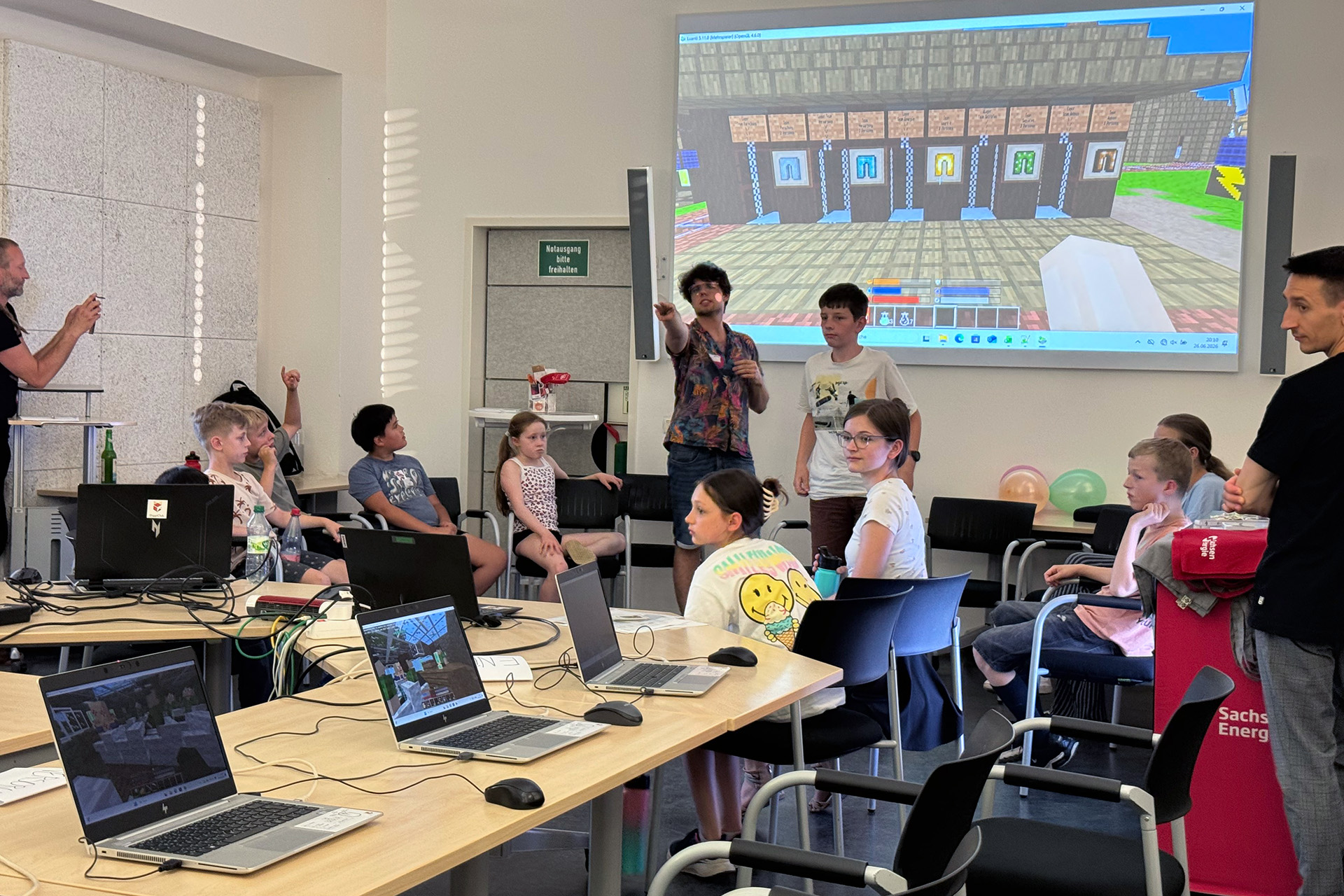
Network Energy Talents e. V. explored these questions on 26 June at the Long Night of Sciences in Dresden. Together with the DiggiClub, NET organised an interactive educational format for pupils aged between six and 16 in the central building of HTW Dresden. At the heart of the activity was the planet “Newtopia” in the year 3000: a world in which fossil fuels are no longer available and a sustainable city of the future needs to be built.
Making the future tangible through play
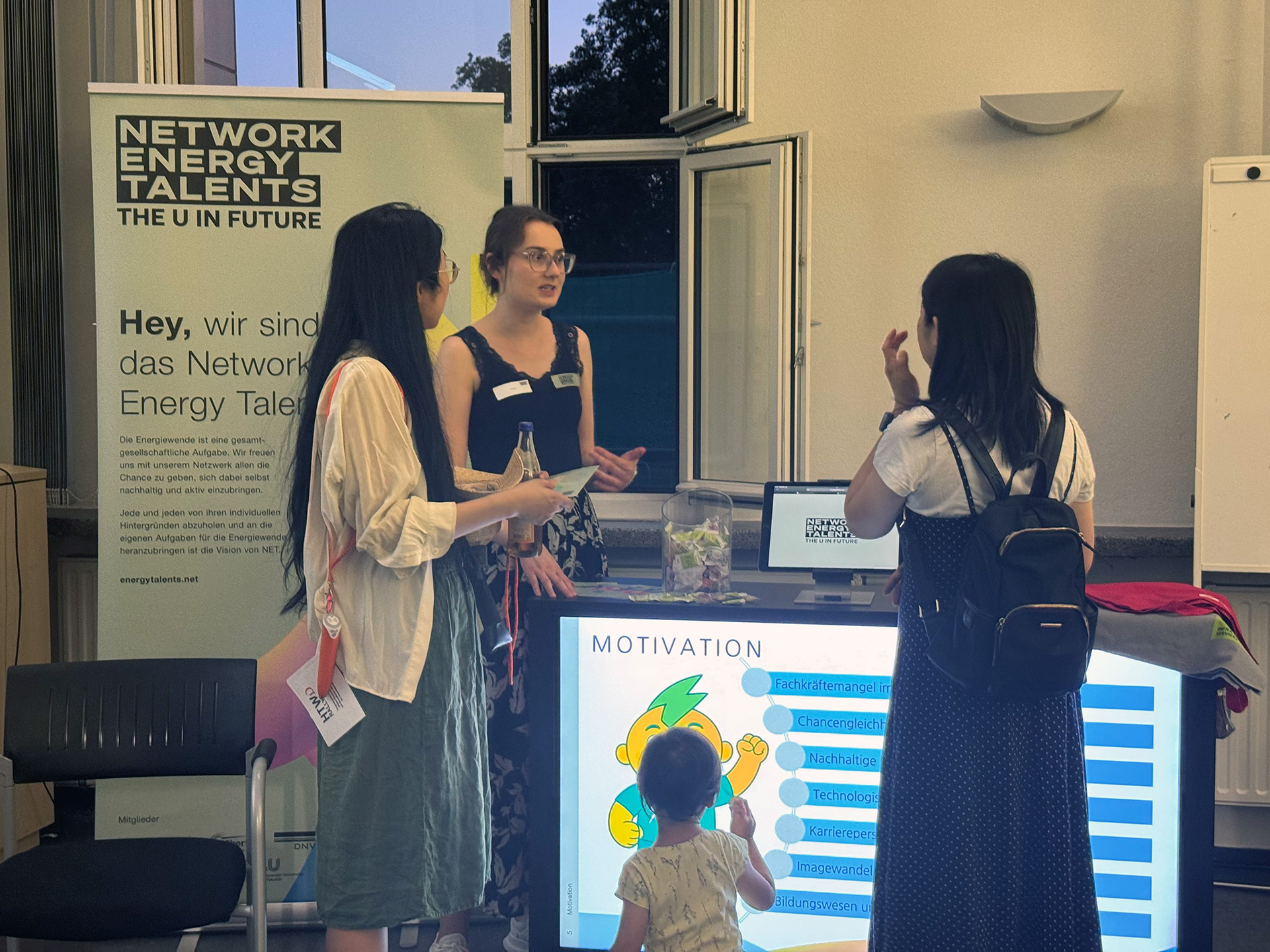
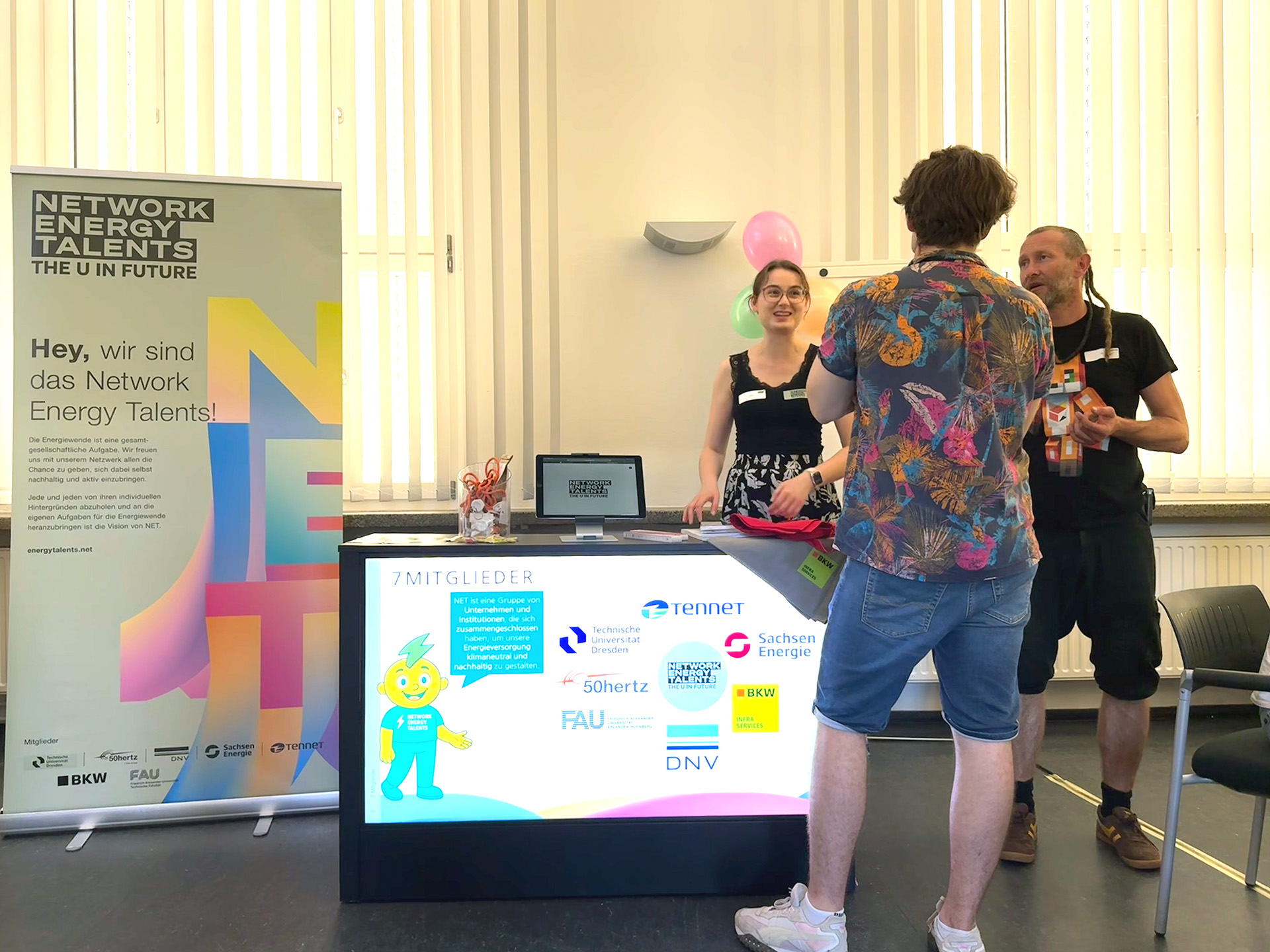
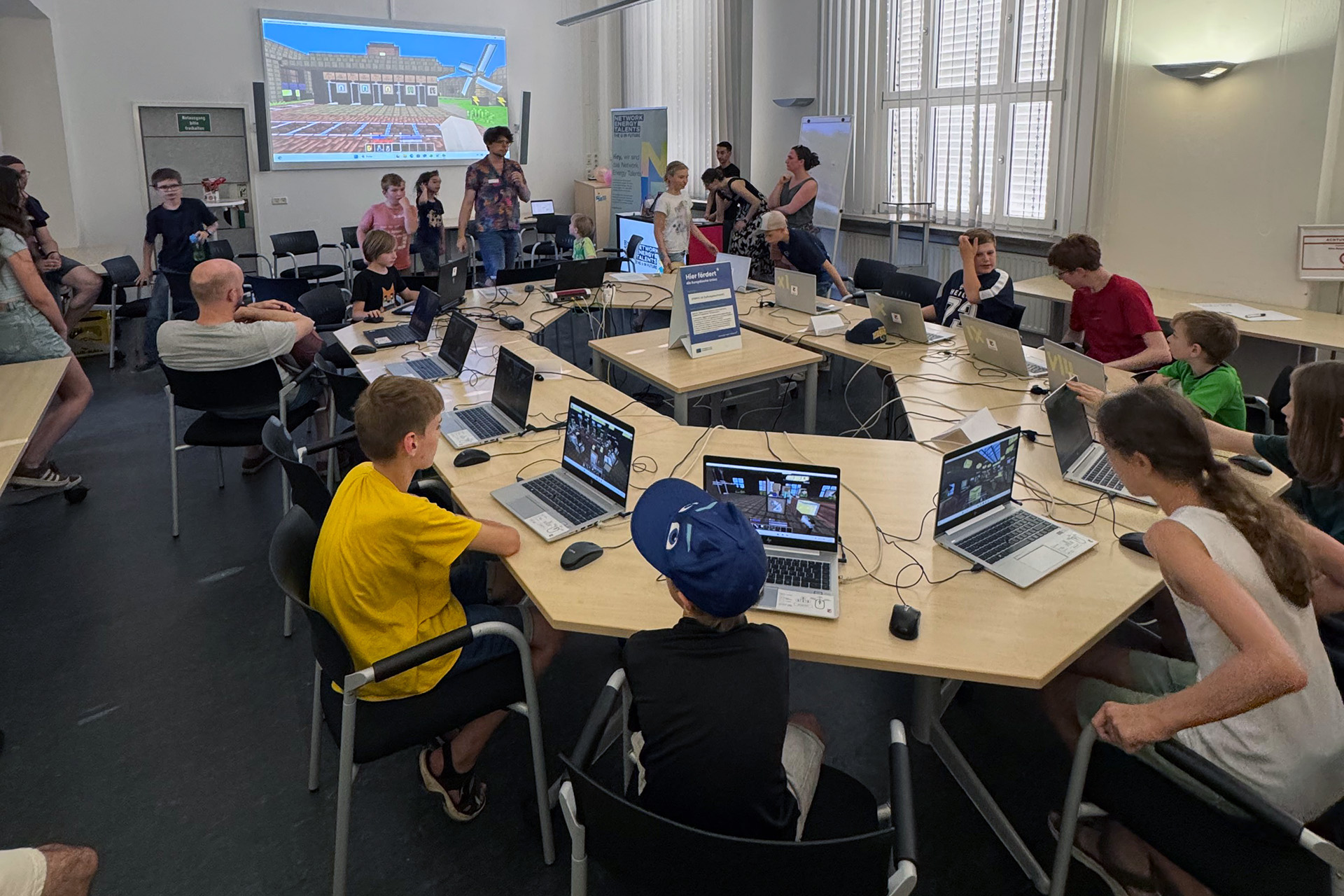
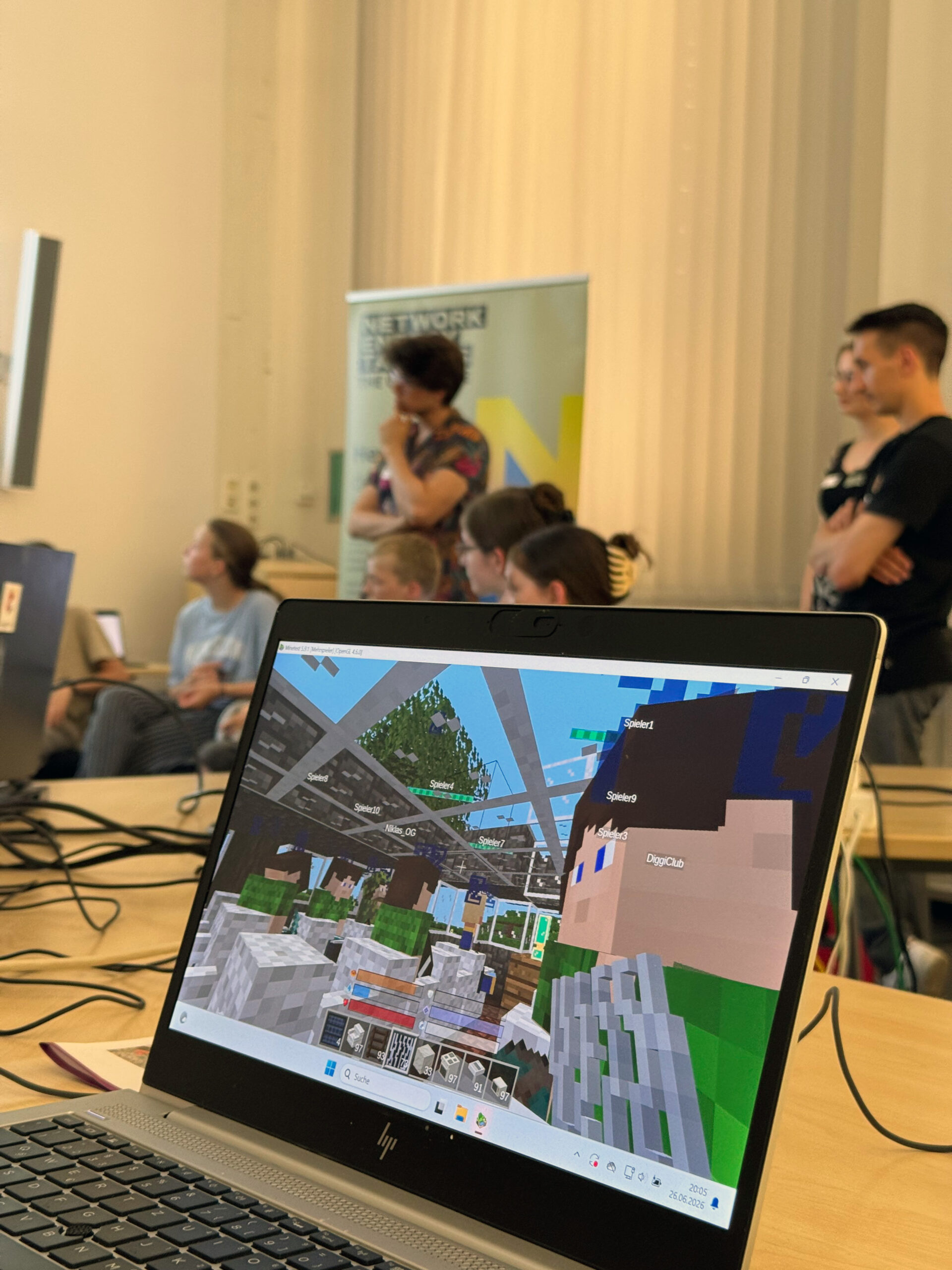 The event combined digital learning, creative teamwork and concrete questions about energy, sustainability and life in society. Across a total of four 90-minute sessions, twelve pupils in each session developed their own ideas for Newtopia. They were supported by four members of the DiggiClub team, including founder Madlen Mollinger, as well as two people from the NET network: Tobias Sachse from the Renewable Energies department at SachsenEnergie and Sophie Rüger from Human Resources.
The aim was to introduce young people to future-focused topics in an accessible way. Instead of abstract knowledge transfer, the focus was on trying things out for themselves. The pupils were able to experience that sustainable urban development needs many different perspectives: technical solutions, renewable energy sources, social ideas, research, supply systems and collaboration.
The Long Night of Sciences offers an opportunity every year to experience research, technology and future topics beyond traditional learning environments. Universities, research institutions, companies and educational organisations open their doors and invite visitors to discover science in a practical way. For NET, the format provided a fitting framework to connect with young people early on and introduce them to questions surrounding energy, sustainability and career prospects in the energy sector.
From idea to sustainable city
Each session began with a roughly 20-minute introduction to the game by the DiggiClub. Afterwards, the participants worked with NET to gather initial thoughts on sustainability. The discussion included questions such as: What does a city need so that people can live well together? Where does energy come from when fossil fuels are no longer available? And what role do technological innovations play in creating a liveable future?
The pupils then had around 60 minutes to build their city in five teams. The groups worked on the areas of research, supply, energy, housing and social affairs. They were accompanied by the DiggiClub team and NET representatives. Over the course of the sessions, a wide range of ideas for a city of the future emerged: from renewable energy sources and storage solutions to spaces designed around community living.
At the end of each round, the teams reflected on their results. Which ideas were successfully implemented? What did not work? Where could collaboration have been improved? The reflection was complemented by a short impulse from NET, linking the activity to the energy sector, the energy transition and future career prospects.
Creativity despite the heat
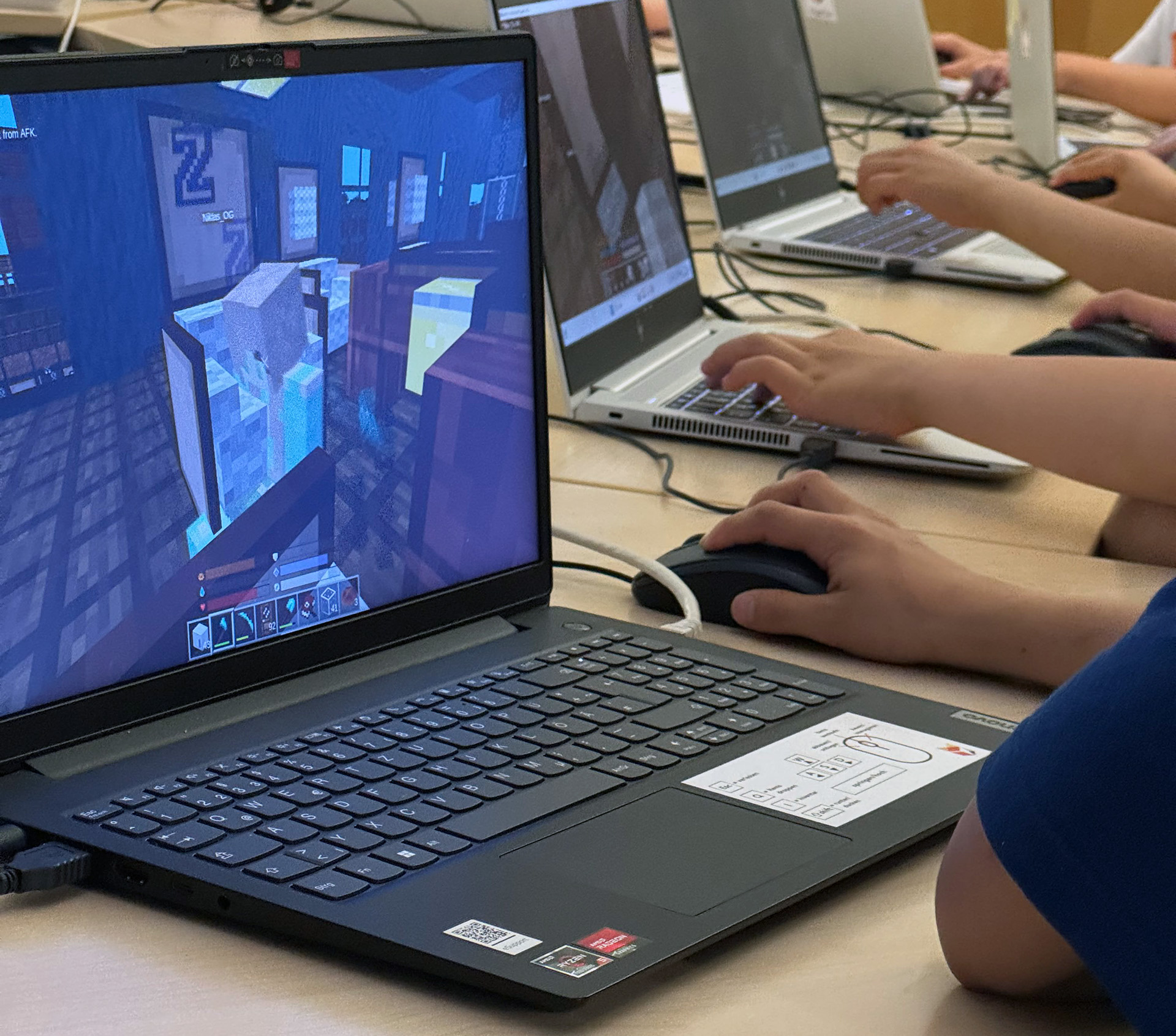 Despite high temperatures and difficult room conditions, the participants worked on their future cities with focus and great enthusiasm. The learning progress across the four sessions was particularly visible: from session to session, the pupils developed their ideas further, took up new impulses and implemented increasingly complex solutions.
One special moment was the construction of a tidal power plant in the sea during the final round. This idea showed how quickly young people can take in technical connections, think them through and translate them into creative solutions. The format made clear that when sustainability, energy and digital learning worlds are brought together in a vivid way, they create space for curiosity, team spirit and future-oriented thinking.
A total of 48 pupils took part in the four sessions. The format therefore reached the defined target group very directly and enabled intensive work in small groups.
Collaboration with the DiggiClub
The collaboration with the DiggiClub proved to be uncomplicated, empathetic and professionally convincing. Particularly positive aspects included the commitment to digital learning, the strong understanding of the young target group and the careful preparation of the game world. The attention to detail in the concept played a key role in helping the pupils quickly immerse themselves in the scenario and develop their own ideas.
For NET, the collaboration offered the opportunity to embed energy topics in a playful, digital learning format. This made complex questions about renewable energies, storage technologies and sustainable supply systems more tangible.
The DiggiClub develops digital learning and experience worlds in a Minecraft-style environment, enabling children and young people to discover future topics through play. Creativity, teamwork and digital skills are at the centre of this approach. For Newtopia, the DiggiClub contributed not only the technical and educational game environment, but also extensive experience in preparing complex content in an age-appropriate, motivating and interactive way.
From game to real perspective: what Newtopia set in motion
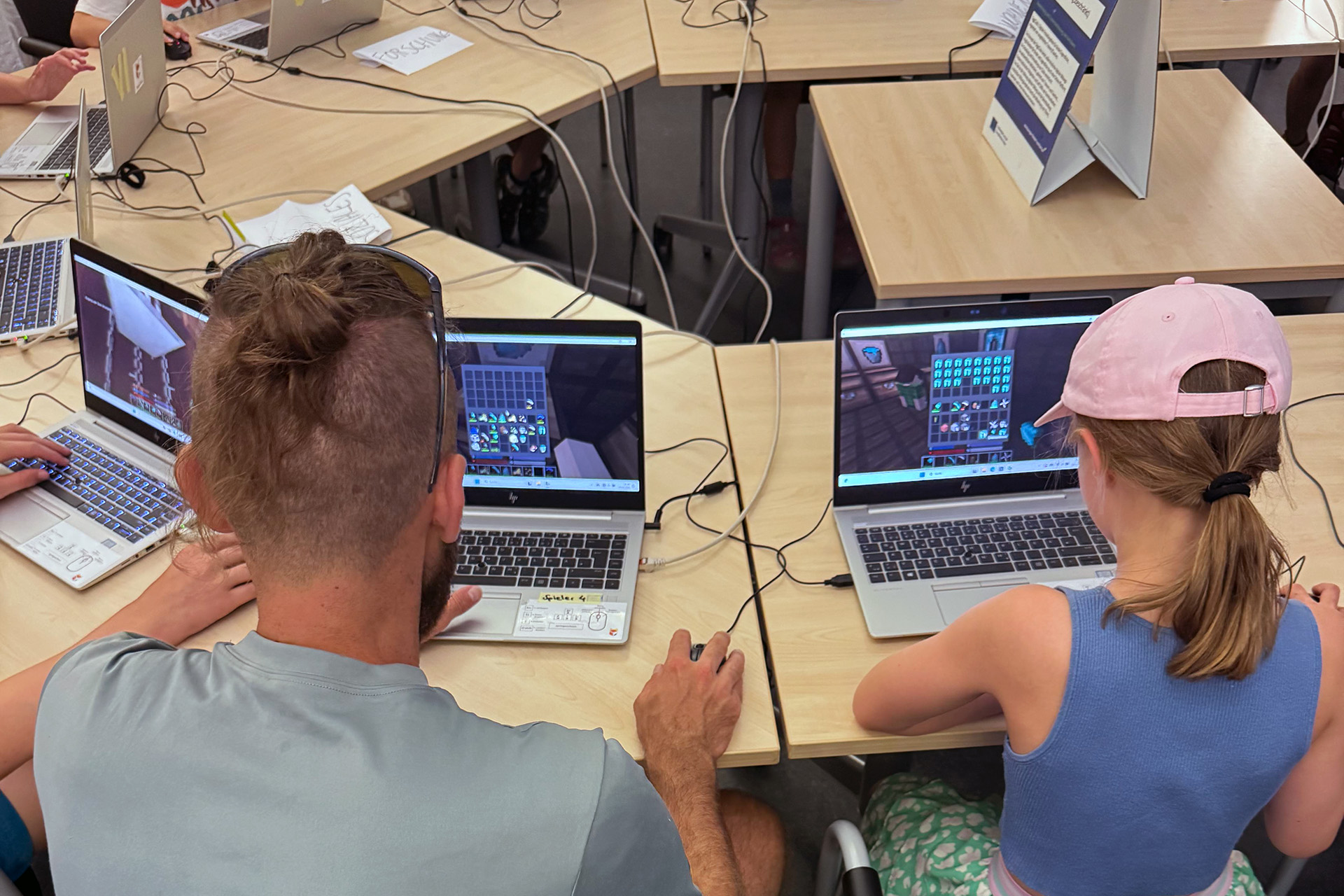 The experiences from the Newtopia format show not only theoretical potential, but very clearly how powerful interactive, playful educational formats can be. During the sessions, it became evident how quickly the participants stepped into the role of creators: within a short time, initial ideas developed into well-considered concepts for energy supply, urban planning and life in society.
For the participating partners, the format was more than just a classic educational activity. It allowed them to experience first-hand how effectively complex topics such as the energy transition, renewable technologies and security of supply can be translated into a playful setting. At the same time, it became clear that formats like this can create a genuine bridge between companies, young talent and society’s future challenges.
Many of the participants developed a noticeable understanding over the course of the sessions of how closely technical, ecological and social aspects are connected. What stood out in particular was how naturally they worked in teams, developed ideas further and discussed solutions – often with a level of seriousness that one might not necessarily expect at this age.
Talent development works particularly well when it becomes something young people can experience directly. The energy transition needs not only specialist knowledge, but people who think in connected ways, act creatively and are willing to take responsibility. These are exactly the skills that became visible during the sessions and they highlight the potential of formats like this.