Wie entsteht Strom? Wie wird er über weite Strecken transportiert? Und warum braucht die Energiewende neue Stromtrassen? Diese Fragen standen im Mittelpunkt eines praxisnahen Nachmittags am TenneT-Standort in Bayreuth. Vier Jugendliche im Alter von 13 und 15 Jahren nahmen dort am Dienstag, 9. Juni 2026, an einem Format der NET-Projektgruppe „Ausprobieren“ teil und wurden Schritt für Schritt zu neuen „Energie-Scouts“.
Unter dem Motto „Entlang des Stroms“ arbeitet die Projektgruppe an einem Kommunikationsbaukasten, der den Weg des Stroms von der Erzeugung über den Transport bis zur Nutzung verständlich erklärt. Ziel ist es, Jugendliche für Energie, Technik und die Energiewende zu begeistern. Statt abstrakter Theorie stehen Experimente, Spiele und anschauliche Materialien im Mittelpunkt. So können junge Menschen selbst ausprobieren, wie Strom entsteht, warum Stromnetze wichtig sind und welche Rolle erneuerbare Energien für die Energieversorgung der Zukunft spielen.
Strom selbst erzeugen: Mini-Generator als praktischer Einstieg
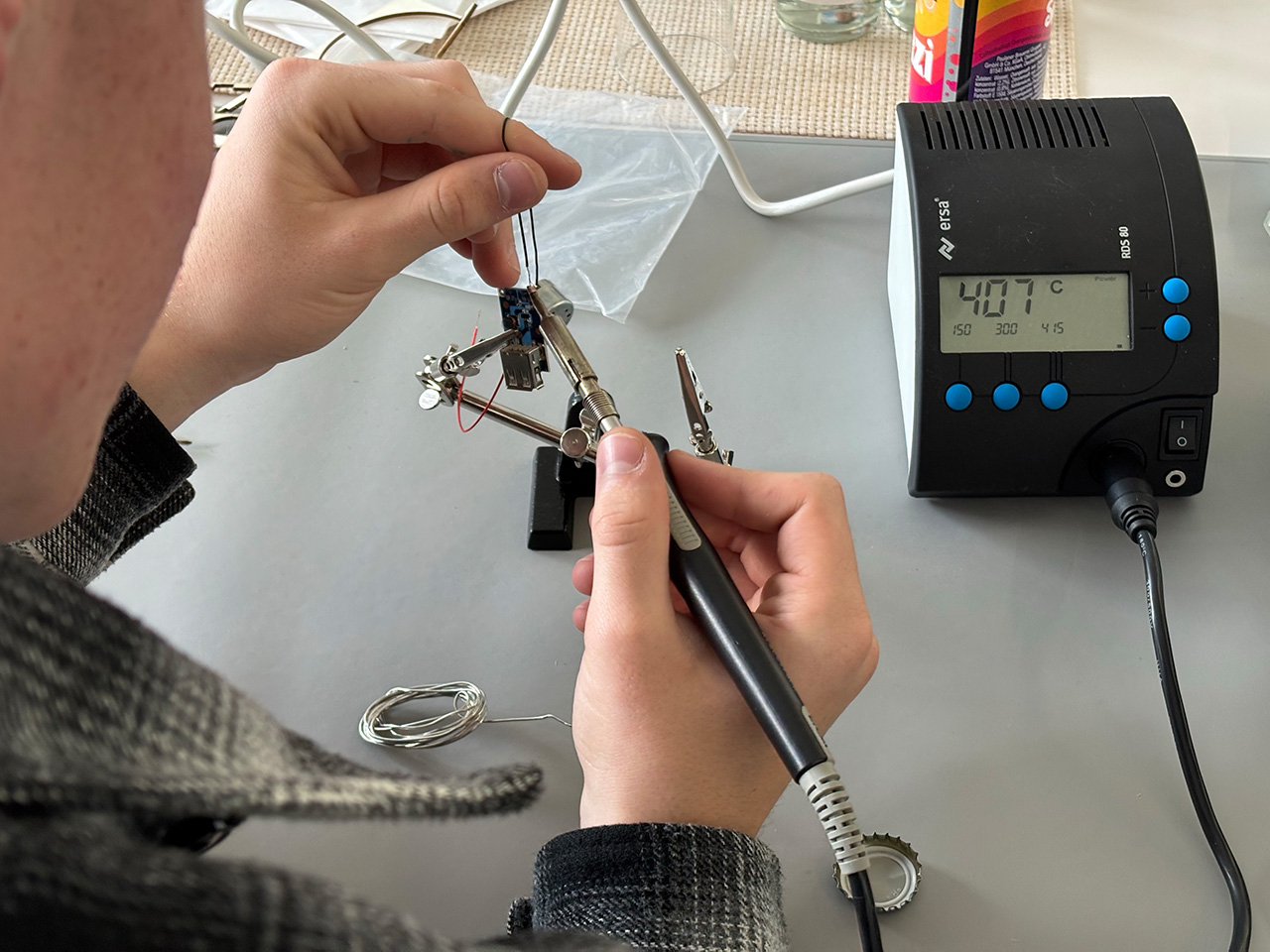
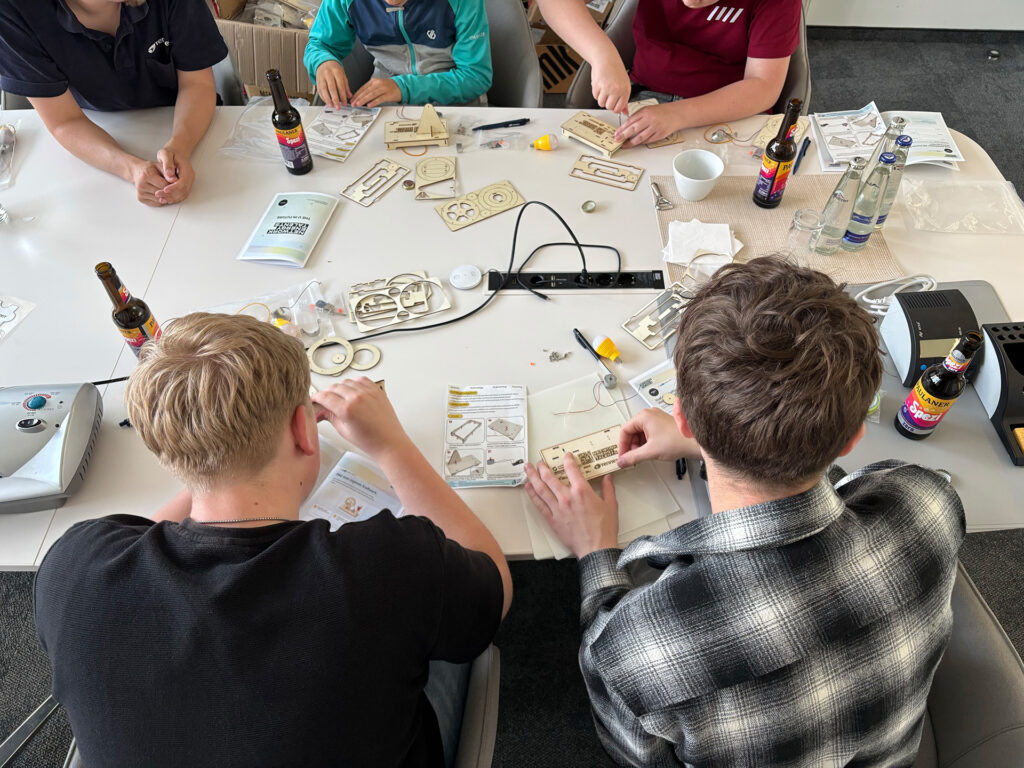
Zum Auftakt bauten die Jugendlichen ihren eigenen Mini-Generator. Dabei durften sie selbst Kabel an eine Platine löten und anschließend testen, wie durch das Kurbeln an einem Rad eine Glühbirne zum Leuchten gebracht wird. Der Versuch machte direkt sichtbar, wie aus Bewegung elektrische Energie entsteht.
Der Mini-Generator zeigte auf einfache Weise ein Grundprinzip der Stromerzeugung: Mechanische Energie kann in elektrische Energie umgewandelt werden. Genau dieses Prinzip spielt auch in vielen Kraftwerken eine wichtige Rolle. Für die Jugendlichen wurde Strom dadurch nicht nur erklärt, sondern unmittelbar erlebbar. Den selbstgebauten Generator konnten sie im Anschluss mit nach Hause nehmen.
Stromtransport einfach erklärt: Warum Stromtrassen gebraucht werden
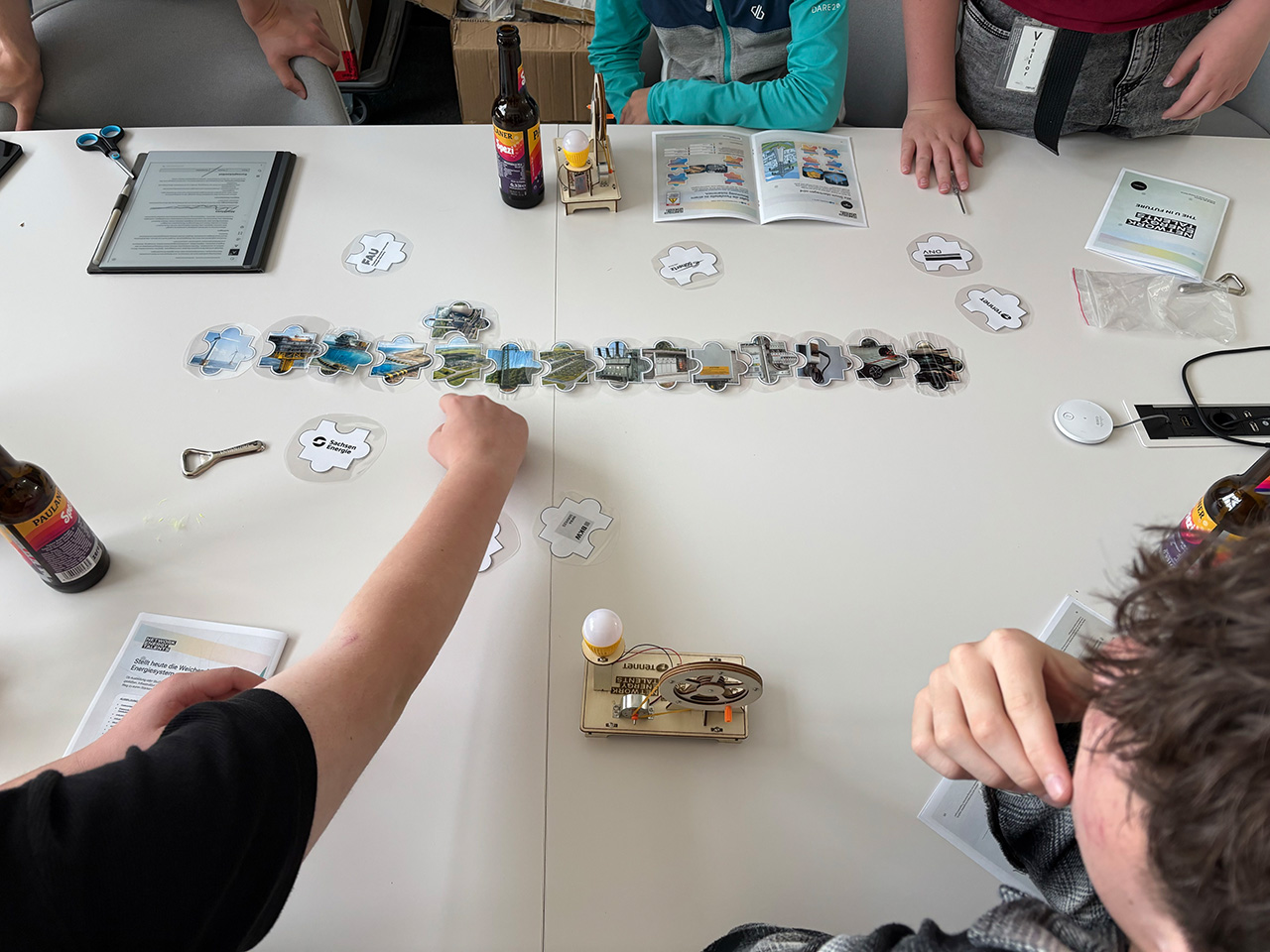
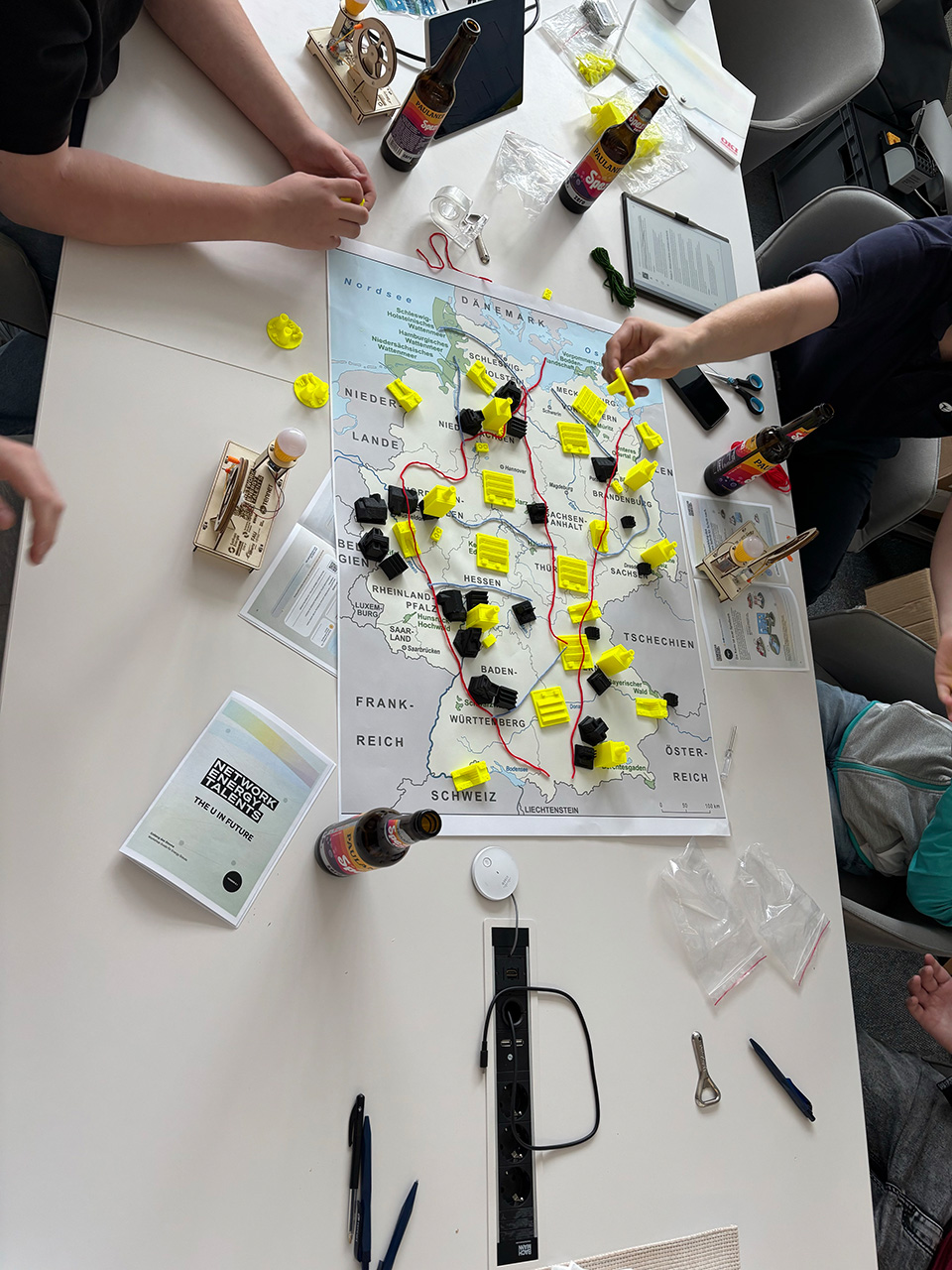
Nach der Stromerzeugung ging es um die nächste zentrale Frage: Wie kommt der Strom dorthin, wo er gebraucht wird? Dafür arbeiteten die Jugendlichen mit einer Deutschlandkarte und 3D-gedruckten Elementen. Zunächst markierten sie Orte, an denen besonders viel Strom benötigt wird, zum Beispiel Regionen mit hoher Bevölkerungsdichte oder viel Industrie. Anschließend betrachteten sie, wo Strom bisher unter anderem durch konventionelle Kraftwerke wie Kohlekraftwerke erzeugt wurde.
Darauf aufbauend diskutierten sie, wie sich die Stromerzeugung durch die Energiewende verändert. Wenn Kohle- und Atomkraftwerke zurückgehen und erneuerbare Energien aus Wind und Sonne weiter ausgebaut werden, entstehen neue Anforderungen an das Stromnetz. Strom wird zunehmend dort erzeugt, wo viel Wind oder Sonne verfügbar ist. Verbraucht wird er aber häufig an anderen Orten. Genau deshalb sind leistungsfähige Stromtrassen wichtig.
„Mich hat besonders beeindruckt, dass die Jugendlichen ohne Vorwissen zu großen Gleichstromtrassen wie SuedLink, SuedOstLink oder Offshore-Anbindungen selbst auf grobe Trassenverläufe gekommen sind.“
Annika Wurster, Strategic Advisor Project Management bei TenneT
Durch den gemeinsamen Austausch und die anschauliche Arbeit mit der Karte wurde schnell sichtbar, wo Strom künftig transportiert werden muss, damit erneuerbare Energie zuverlässig dort ankommt, wo sie gebraucht wird.
Was machen Transformatoren und Umspannwerke?
Auch die Rolle von Transformatoren und Umspannwerken wurde praktisch erklärt. In einem Experiment mit Spulen unterschiedlicher Wicklungsanzahl konnten die Jugendlichen nachvollziehen, wie elektrische Spannung verändert wird. So wurde verständlich, warum Strom auf dem Weg durch das Netz auf verschiedene Spannungsebenen gebracht werden muss.
Ein Umspannwerk verbindet unterschiedliche Spannungsebenen miteinander. Für den Stromtransport über weite Strecken wird eine hohe Spannung genutzt, weil Energie so effizienter übertragen werden kann. Für die Nutzung in Haushalten, Schulen oder Unternehmen muss die Spannung später wieder angepasst werden. Das Experiment zeigte damit einen wichtigen Baustein der Stromversorgung auf einfache und greifbare Weise.
MINT-Nachwuchsförderung durch Ausprobieren
Geleitet wurde der Nachmittag von Alexander Pahlitzsch von TenneT. Unterstützt wurde er von Alina Feldmeier von der FAU Erlangen-Nürnberg und Annika Wurster. In der NET-Projektgruppe „Ausprobieren“ arbeiten Mitgliedsunternehmen und Mitgliedsuniversitäten gemeinsam an den Inhalten des Kommunikationsbaukastens.
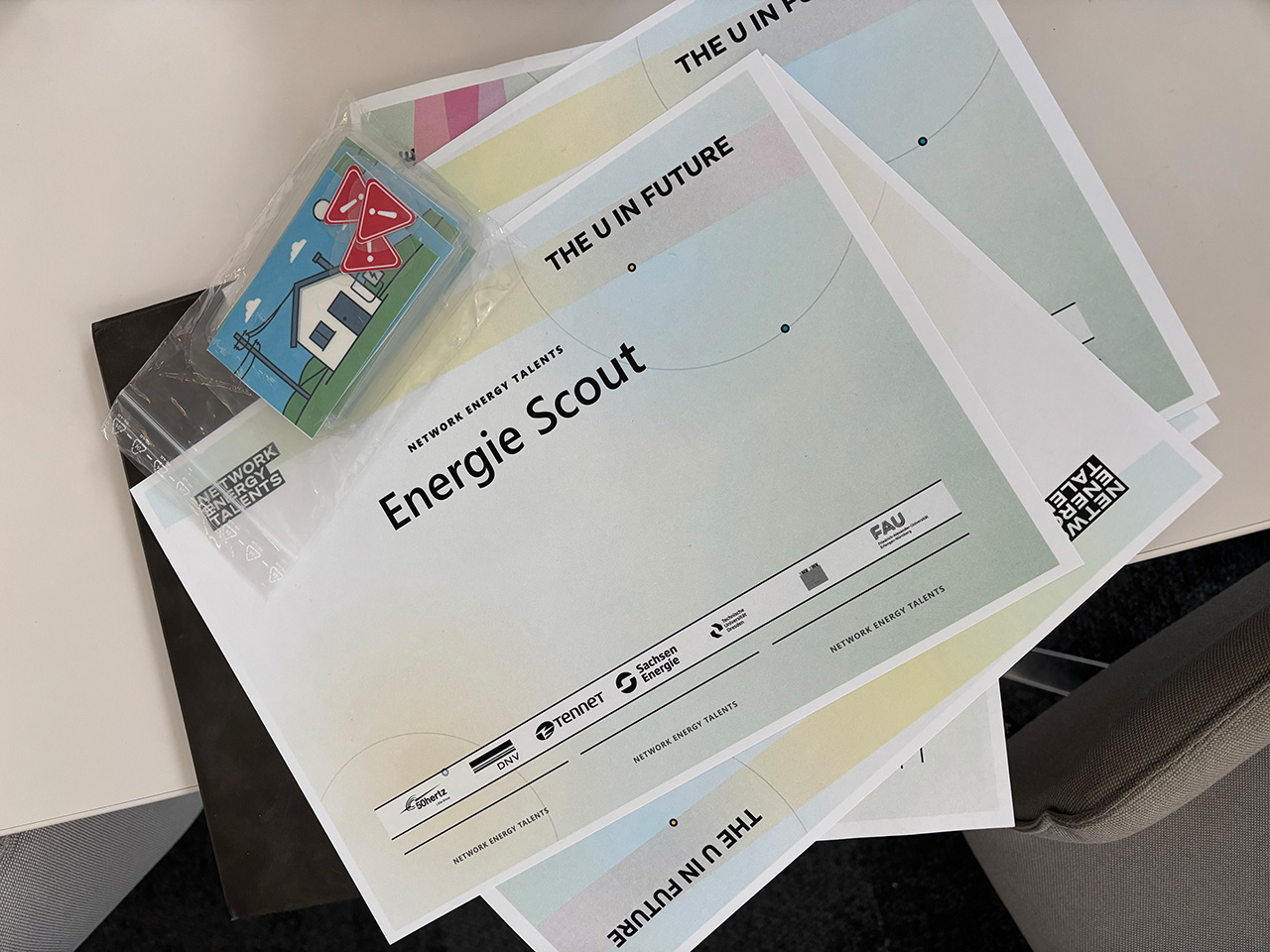
Zum Abschluss gab es Pizza für alle und eine Urkunde für die neuen „Energie-Scouts“. Die Jugendlichen hatten Spaß, lernten viel über Strom, Stromnetze und Energiewende und gaben der Projektgruppe zugleich wertvolle Einblicke für die Weiterentwicklung des Kommunikationsbaukastens.