A secure energy supply for the region: SachsenEnergie as part of the network
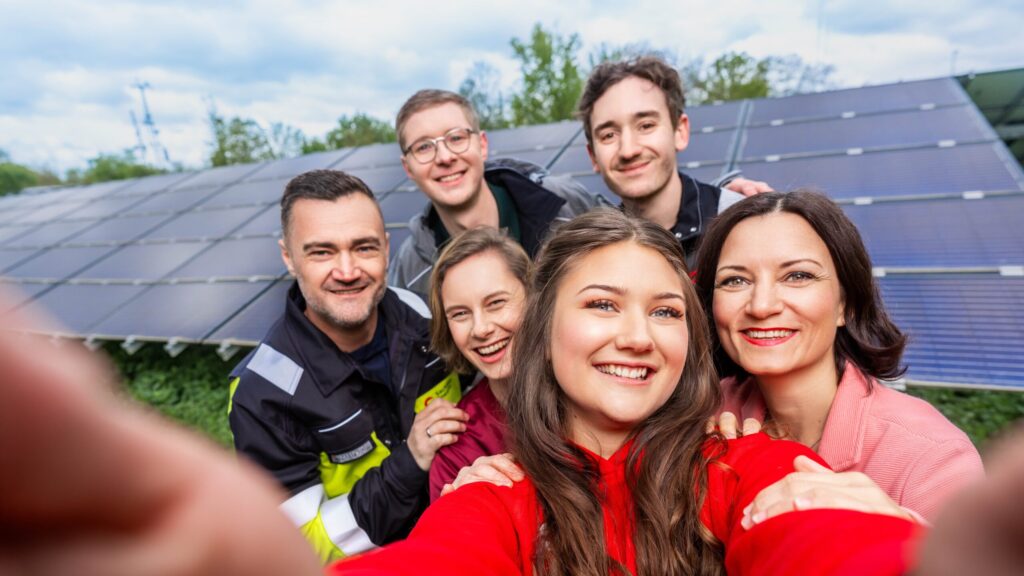
Who actually belongs to Network Energy Talents? Which companies are actively shaping the energy transition? And what opportunities do they offer young talents who see their professional future in the energy sector? Through our company profiles, we show who is behind our network and just how diverse the roles involved in the energy transition are. This time, we are introducing SachsenEnergie AG . Energy for Saxony and the region SachsenEnergie is the largest municipal utility in eastern Germany. Around 4,000 employees work every day to ensure that people and businesses receive a reliable supply of services. The range of services extends from electricity, gas, heating and water to telecommunications, electric mobility and smart services. The Company thus plays a central role in providing essential public services in the region. At the same time, the company is consistently looking to the future. After all, a secure energy supply and the energy transition must be considered together. SachsenEnergie therefore sees itself as a driving force behind a smart energy transition. The company is investing in regional infrastructure, further expanding renewable energy sources and developing the networks to meet the demands of the future. Shaping the energy transition in practical terms To ensure that the energy supply remains climate-friendly, efficient and, at the same time, reliable, many areas must work in tandem. SachsenEnergie is therefore taking a multi-pronged approach. One key focus is on the expansion and modernisation of the grid infrastructure. This is because electricity grids will have to cope with significantly greater demands in future. They connect an ever-increasing number of decentralised generation plants, consumers and new technologies, thereby forming an important foundation for the energy system of tomorrow. At the same time, SachsenEnergie is driving forward the expansion of renewable energy. Added to this are digitalisation and efficiency improvements, which enable the energy supply and infrastructure to be managed and developed in a smarter way. In this way, the company is helping to combine security of supply with decarbonisation in Saxony. A wide range of opportunities for young talents The transformation of the energy supply requires not only new technologies, but above all people to develop, plan and implement them. SachsenEnergie therefore offers school pupils, students and those starting their careers a wide range of opportunities to get to know the energy sector and take on responsibility themselves. These include, amongst others: Apprenticeships Dual study programmes Work placements Part-time student roles Theses Trainee programmes Direct entry There is particular demand for young professionals from disciplines such as electrical engineering, energy engineering, industrial engineering and computer science. Anyone interested in technical concepts, fascinated by digitalisation or keen to play a part in shaping the energy supply of the future will find a correspondingly diverse range of roles at SachsenEnergie. Taking responsibility and developing further For young talent, it’s not just about starting their careers. SachsenEnergie aims to give employees the opportunity to contribute their own ideas and take on responsibility. In addition, the company offers opportunities for personal and professional development, as well as flexible working hours, attractive remuneration and a range of additional benefits. Team-building activities, staff events, a job ticket, health management and a company pension scheme are also part of what the company offers. The #TeamSachsenEnergie brings together more than 4,000 employees from different departments and regions across the group. Working together to inspire the next generation about the energy transition This is precisely where Network Energy Talents’ commitment comes in. Together with other companies, universities and partners, SachsenEnergie aims to attract young talent to the energy sector at an early stage and inspire a long-term interest in this field. Through workshops, work placements, events and initiatives such as the Energy Mentoring Programme, young people gain insights into STEM careers and the various career paths available in the energy sector. Through dialogue with companies and experienced professionals, they can learn about the wide range of roles involved in the energy transition and make initial contacts to help shape their future careers. “Many young people are not yet aware of just how many exciting STEM careers lie behind the energy transition. Together with Network Energy Talents, we want to provide guidance, offer insights and demonstrate the diverse opportunities the energy sector has to offer.” —Anni Töppel, Employer Brand Manager We are delighted to have SachsenEnergie as another strong partner in our network and to work together to inspire even more talented individuals to get involved in the energy transition.
A degree that really makes a difference
You’ve finished your A-levels and suddenly things are getting serious. Application deadlines are approaching, degree programmes need to be compared and the first decisions have to be made. Which subject suits your interests? Which degree programme offers good prospects? And which one might even allow you to make a difference later on? There’s no simple answer to these questions. But anyone interested in climate protection, technology, digitalisation and the energy supply of the future should take a closer look at STEM subjects. STEM stands for Science, Technology, Engineering and Mathematics. This includes degree programmes such as electrical engineering, computer science, mechanical engineering, industrial engineering, energy engineering and environmental engineering. They all open up different paths into the energy sector. After all, the energy transition needs people who can plan electricity grids, integrate renewable energies, develop storage solutions, analyse data, automate systems and implement complex projects. A STEM degree can lay the foundations for this. Which degree programme is best suited to climate protection? Anyone wishing to contribute to climate protection might first think of environmental sciences, sustainability management or renewable energies. These degree programmes are important options. However, climate protection requires a much wider range of disciplines. Wind turbines need to be designed and connected to the electricity grid. Solar power needs to be distributed or stored. Buildings require climate-friendly heating. Electricity grids need to become more digital, more efficient and more secure. Industrial companies need to adapt their processes. And all these tasks require technical, scientific and digital expertise. That is why many STEM degree programmes can pave the way to a career in climate action. These include, amongst others: Electrical Engineering and Electrical Power Engineering Computer Science and Business Informatics Mechanical Engineering Mechatronics Industrial Engineering Energy Engineering Environmental Engineering Civil Engineering Physics Chemistry and Process Engineering Mathematics and Data Science Degree programmes in renewable energy and energy systems So it’s not just the name of the degree programme that matters. It’s also important which topics you go on to study in depth, what practical experience you gain, and in which field you wish to apply your knowledge. A degree in Computer Science, for example, can lead to a career in digital grid control. With a degree in Mechanical Engineering, you can work on wind turbines, electrolysers or heating systems. Industrial Engineering combines technical fundamentals with economic and organisational issues. And with a degree in Electrical Engineering, you can play a direct role in the systems that generate, transmit, distribute and utilise electricity. What jobs does the energy transition require? The energy transition requires far more than just one profession. It is a complex transformation of our entire energy system. Electricity generation, grids, storage, heat supply, mobility, industry and digital control must all work together. This gives rise to a wide range of roles for STEM graduates. Electrical engineers, for example, design power lines, substations and switchgear. They develop protection systems, oversee the integration of renewable energy sources and ensure that the electricity grid operates reliably. Computer scientists develop software for grid control centres, analyse energy data or protect digital infrastructure from cyber-attacks. Mathematicians and data scientists create models and forecasts. They help to predict when and how much electricity will be generated and consumed. Mechanical engineers work on wind turbines, storage systems, heat pumps and hydrogen technologies. Specialists in physics, chemistry and materials science conduct research into new solar cells, battery materials and engineering materials. Industrial engineers are also in demand. They combine technical expertise with business acumen and take on roles in project management, consultancy, regulation, digitalisation, strategy and corporate development. Typical career fields in the energy sector include: Grid planning and operations High-voltage and testing technology Renewable energies Storage and battery technology Hydrogen technologies Software development Data analysis and artificial intelligence Automation and control systems Cybersecurity Energy and building services engineering Electric mobility and charging infrastructure Research and development Technical consultancy Project management Regulation and energy markets Sustainability and corporate strategy The International Energy Agency reports that employment in the energy sector is growing faster worldwide than employment in the economy as a whole. At the same time, the shortage of skilled workers is becoming more acute in many areas. Skills required for the expansion, modernisation and digitalisation of energy infrastructure are in particularly high demand. STEM opens up opportunities Perhaps in the future you’d like to: develop new technologies design complex systems analyse data programme software coordinate projects advise companies conduct research explain technical topics take responsibility for critical infrastructure Often, a clear direction only emerges once theoretical knowledge is combined with practical experience. Why are STEM subjects so important for the energy transition? The energy transition calls for solutions to questions that rarely have a single, simple answer. How can the electricity grid remain stable when wind and solar energy are generated depending on the weather? How can energy be stored? What transmission lines are needed? How can electricity, heating, transport and industry be integrated? How can digital energy systems be protected? And how can new technologies be deployed in an affordable and reliable way? Solving such challenges requires a range of STEM perspectives: Mathematics helps to model and optimise energy systems. Computer science enables digital control, data analysis and cyber security. The natural sciences lay the foundations for materials, storage systems and new technologies. Engineering turns insights into functioning systems and infrastructure. STEM is therefore not just about learning formulas or building technical devices. STEM is about understanding problems, developing solutions, testing assumptions and putting ideas into practice. How does NET support students with their studies and career choices? Network Energy Talents brings young people together with universities, companies and professionals from the energy sector. Through events, workshops, company visits and one-to-one discussions, participants gain an insight into just how varied STEM careers can be. NET’s Energy Mentoring programme is aimed at students of electrical engineering and industrial engineering. Experienced mentors from the energy sector provide insights into their career paths, answer questions and offer support on topics such as organising your
From the panel discussion to the substation: How a conversation led to an internship at 50Hertz
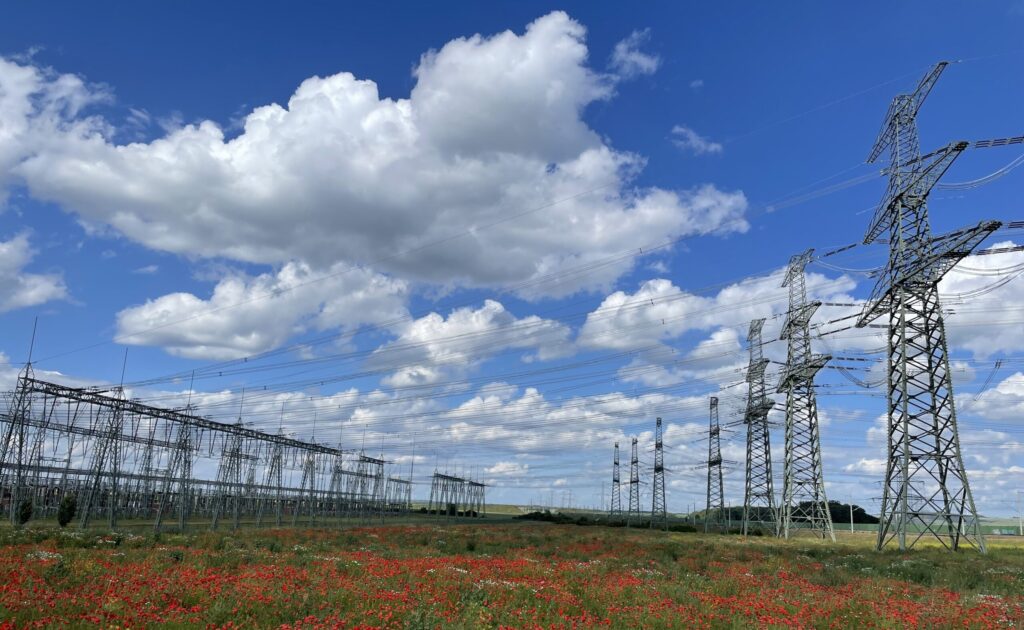
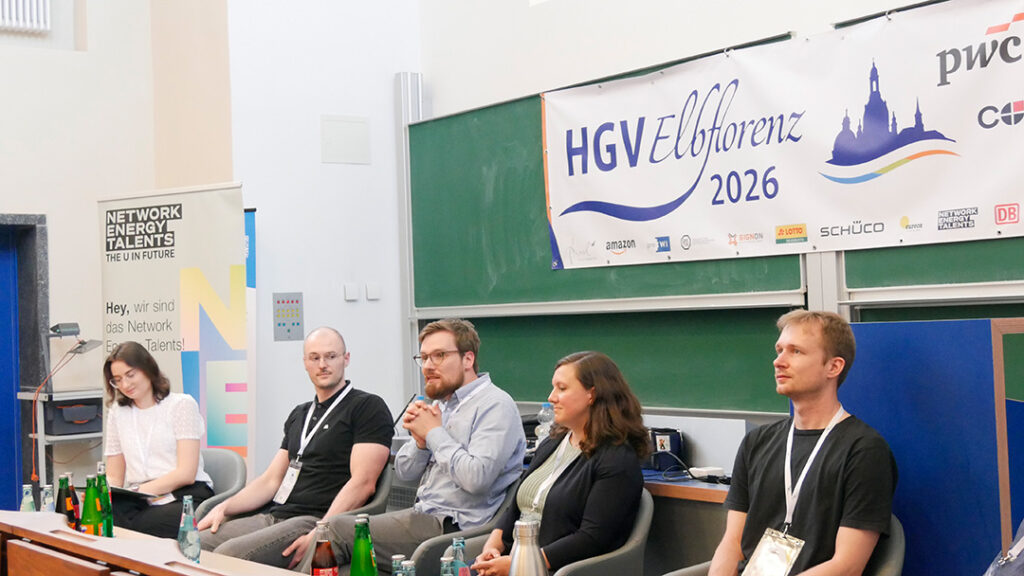
Sometimes all it takes is a conversation to turn an interest into a real opportunity. That is exactly what Network Energy Talents is all about: bringing young people together with companies, work placements and professionals from the energy sector. After all, anyone who wants to help shape the energy transition needs not only theoretical knowledge, but also real-world insights into the world of work. The example of Oliver Herrmann shows just how valuable such encounters can be. He is studying Renewable Energy Systems at TU Dresden and was looking for a suitable introductory work placement as part of his degree. He got talking to 50Hertz during a panel discussion organised as part of Energy Talents. A few weeks later, he received a response from the Eastern Regional Centre. And so, that initial exchange became the starting point for a four-week work placement in the field of primary technology. A look behind the scenes of power transmission During his work placement, Oliver gained an in-depth insight into the day-to-day work at the Eastern Regional Centre, particularly in the field of primary technology. 50Hertz is one of Germany’s four transmission system operators and operates the extra-high-voltage grid in the eastern German federal states and in Hamburg. Electricity is transmitted over long distances via this grid. In substations, transformers are used to step down the voltage from the extra-high-voltage level to lower voltage levels before distribution system operators take over the distribution. For Oliver, this meant, above all, moving away from theory and into practice. He accompanied staff to various substations, familiarised himself with the equipment, switchgear and transformers, and gained an understanding of just how complex yet precise the processes involved in power transmission are. His insights included, amongst other things: Maintenance work on transformers familiarising himself with switchgear and busbars applying the five safety rules inspections of overhead lines insights into primary and secondary technology working at the technical monitoring station This made it clear to him just how many people, systems and technical components have to work together to ensure that electricity can flow reliably. When theory suddenly becomes tangible Oliver found the direct link to his degree course particularly exciting. During his on-site work placement, he was able to rediscover concepts he had previously learnt in his Electrical Power Engineering module. Technical terms, circuit diagrams and theoretical concepts were transformed into real-life installations, specific work procedures and practical experience. Whether it was maintaining a transformer, looking inside a relay cabinet or inspecting an overhead line, Oliver was able to appreciate the responsibility that comes with working on the energy infrastructure. At the same time, he experienced first-hand just how important teamwork, safety and experience are in this field. He was particularly impressed by the openness of the staff at the Eastern Regional Centre. They explained procedures, took the time to answer his questions and allowed him to get involved in the work wherever his level of knowledge permitted. The result was an internship that not only provided professional guidance but also gave him a personal insight into just how varied career paths in the energy sector can be. Inside Internships: Turning contacts into opportunities This is exactly where Network Energy Talents comes in. With Inside Internships, we show how initial contacts can lead to concrete practical insights. After all, the energy transition needs young people who not only want to understand it, but also actively help shape it. This requires initiatives that provide guidance and facilitate connections. Panel discussions, university events and networking opportunities create spaces where students and companies can engage in dialogue. Such conversations can lead to work placements, contacts and new opportunities. Oliver’s example shows that a single exchange can be the start of an important step. For students, an internship offers the opportunity to explore career fields, put their studies into context and refine their own interests. For companies, it is a chance to reach young talent at an early stage and show them the roles and development opportunities the energy sector has to offer. Guidance for young STEM talents Many young people are interested in technology, sustainability and issues facing the future. At the same time, it is often not immediately clear what career paths might result from these interests. The energy sector offers numerous opportunities in this regard: from grid operations and plant design, through digitalisation, project management and research, to communications, strategy and staff development. Network Energy Talents aims to highlight this diversity. The association brings together universities, companies and young talent, and provides access to real-world experience. It is not just about information, but above all about genuine interactions. After all, those who get to know people from the sector, can ask questions and experience workplaces first-hand gain a much clearer picture of where their own path might lead. This is precisely where Network Energy Talents’ mentoring programme comes in: it brings young people together with experienced professionals from the energy sector, creates space for questions and helps them develop their own perspectives on their studies, careers and the energy transition. Shaping the energy transition together Oliver’s work placement at 50Hertz shows just how valuable such insights are. A panel discussion led to a contact. That contact led to a work placement. And that work placement provided a real-life insight into the world of power transmission. Stories like this highlight why networks such as Network Energy Talents are so important. They connect young people with companies, provide guidance and open up opportunities in an industry that is central to the future of our energy supply. Would you like to create opportunities, nurture talent or help shape the energy transition yourself? Then join Network Energy Talents.
Why Mentoring Provides Guidance
Many young people begin a technical or scientific degree full of motivation. However, particularly in demanding degree programmes, questions may arise after the first few semesters: Is this degree really right for me? How will I use what I am learning later on? What career opportunities will I have after graduating? And how can I find out which path best suits my interests and strengths?
HIGHVOLT Brings High-Voltage Expertise to the NET Network
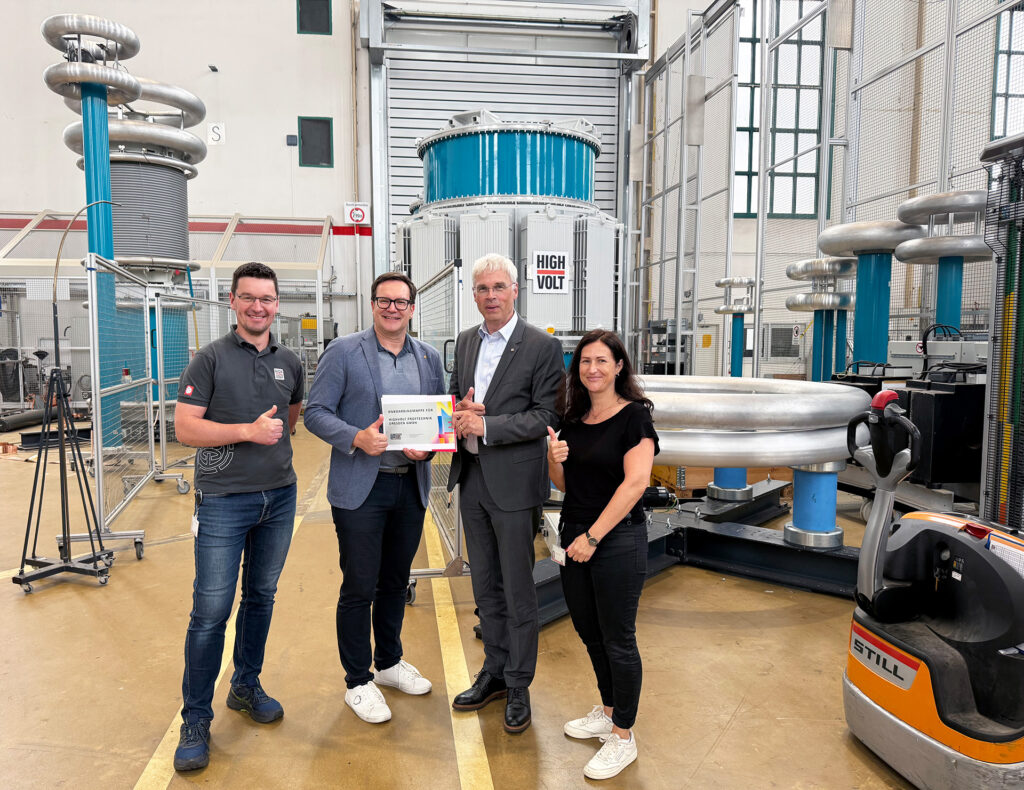
The energy transition needs strong networks, technical expertise and young people who see their future in the energy sector. With HIGHVOLT Prüftechnik Dresden GmbH, Network Energy Talents e.V. welcomes a new member that strengthens precisely this connection: between industry, science, practice and talent development. HIGHVOLT is a specialist in high-voltage and testing technology and brings extensive experience in a key area of energy supply. Before transformers, cables, switchgear and other electrical equipment can be used reliably in power grids, they must meet the highest technical requirements. Testing and measurement technology makes an important contribution to this. Promoting young talent for tomorrow’s energy sector Supporting young talent is a crucial success factor for the energy transition. New technologies, growing power grids, renewable energies and an increasingly electrified society are creating major challenges for the sector. This calls for well-trained specialists, practical guidance and direct insights into companies that are actively shaping the energy supply of the future. As a member of Network Energy Talents e.V., HIGHVOLT aims to intensify its exchange with students, young professionals, universities and other partners in the energy sector. The focus is on joint projects, knowledge transfer and the question of how young people can be inspired by technical careers and future-facing topics in the energy industry. High-voltage testing technology as a contribution to secure energy supply HIGHVOLT Prüftechnik Dresden GmbH develops systems for high-voltage testing and measurement technology. These technologies help ensure the reliable functioning of electrical equipment and minimise downtime or malfunctions. In this way, the company makes an important contribution to the stability and availability of electrical grids. This task is becoming increasingly important as the energy transition progresses: electricity must be generated, transmitted, distributed and used reliably. This requires safe systems, resilient components and innovative testing technology. Exchange between science, industry and practice NET e.V. brings together companies, universities and institutions that want to attract and support young talent for the energy sector. With HIGHVOLT, the network gains a company that contributes technological expertise, international experience and practical insights into high-voltage testing technology. Together with the other members, HIGHVOLT aims to help provide young professionals with guidance, make career paths visible and spark enthusiasm for technical roles in the energy sector. The focus is not only on sharing specialist knowledge, but also on personal exchange between experienced experts and the next generation. We look forward to the exchange, joint projects and many new ideas for the energy talents of tomorrow.
Newtopia: Building the City of the Future at the Long Night of Sciences
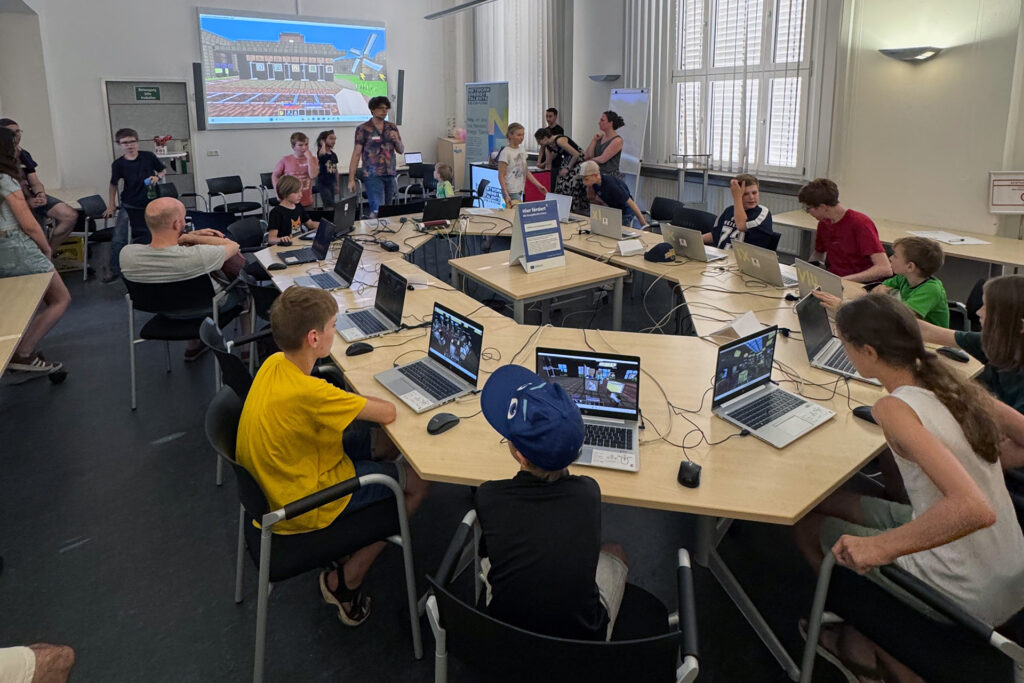
How can a city look when fossil fuels are no longer available? What role do renewable energies, battery storage, research and community living play? And how can future-focused topics like these be communicated in a way that children and young people not only understand them, but also continue to develop them creatively?
Network Energy Talents e. V. explored these questions on 26 June at the Long Night of Sciences in Dresden. Together with the DiggiClub, NET organised an interactive educational format for pupils aged between six and 16 in the central building of HTW Dresden. At the heart of the activity was the planet “Newtopia” in the year 3000: a world in which fossil fuels are no longer available and a sustainable city of the future needs to be built.
Following the Flow of Electricity: Young People Learn About Power Transmission and the Energy Transition at TenneT
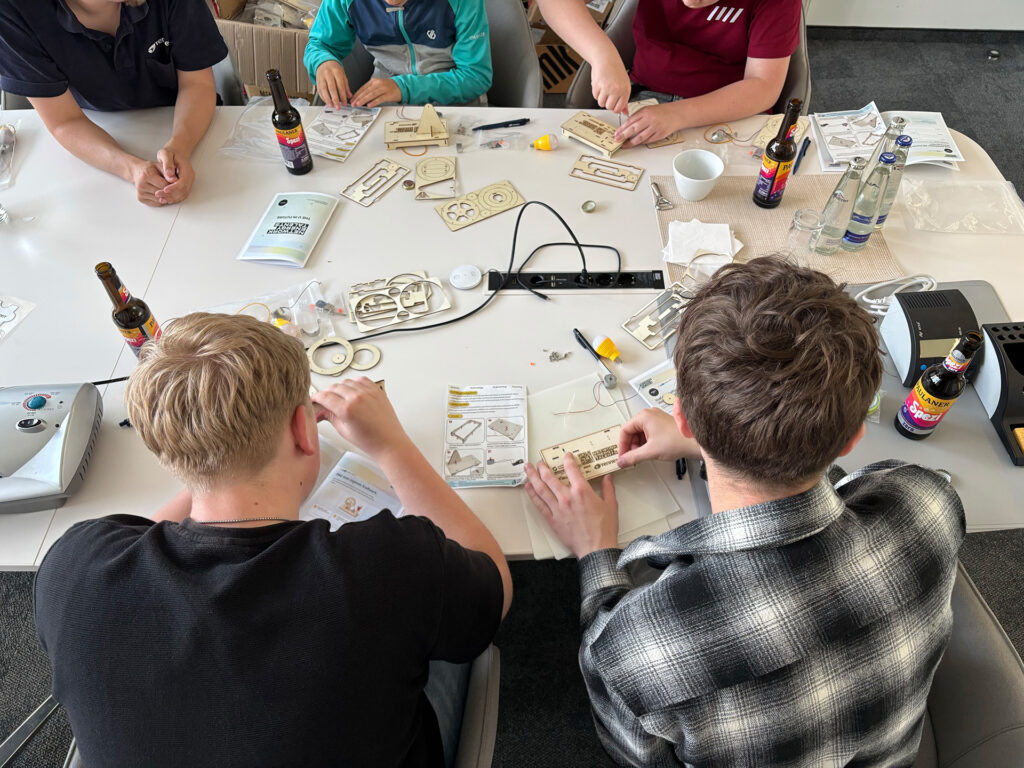
How is electricity generated? How is it transmitted over long distances? And why does the energy transition require new power lines? These questions were the focus of a hands-on afternoon at the TenneT site in Bayreuth. Four young people aged between 13 and 15 took part in a session organised by the NET project group’s “Try it out” initiative there on Tuesday 9 June 2026, and were gradually trained as new “energy scouts”.
NET Brings the Energy Sector to the VWI University Group Meeting at TU Dresden
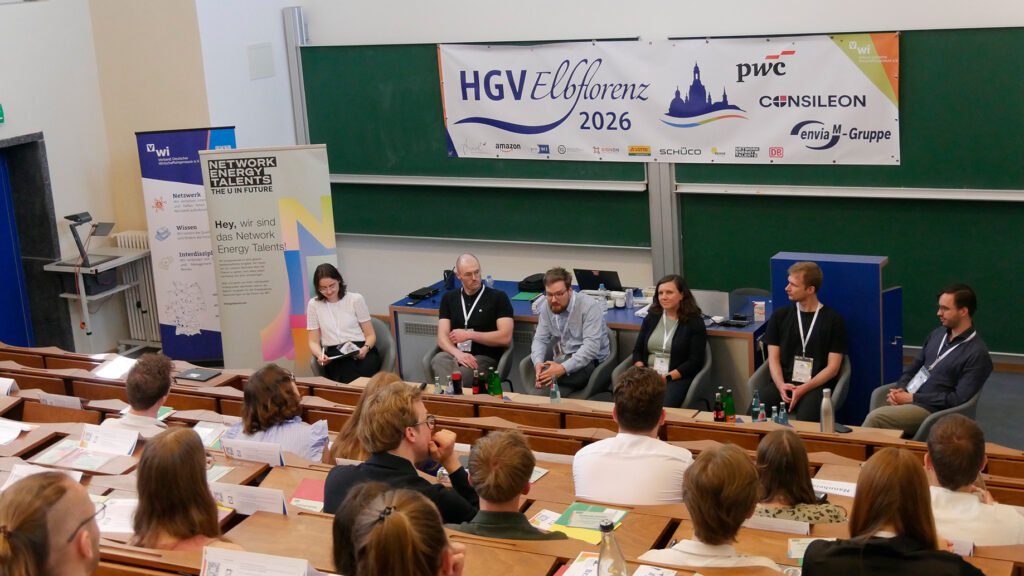
In the old canteen at TU Dresden, the event begins quite informally: organisers and speakers gather for lunch together before moving on to the main discussion. Shortly afterwards, five industrial engineers from the energy sector take their places on the podium. Before them: 26 enthusiastic students from VWI university groups across Germany, keen to find out what career paths are open to them after graduation.